Ignoring a Fair Work Compliance Notice: $33,522 in Penalties for a Company and Its Director
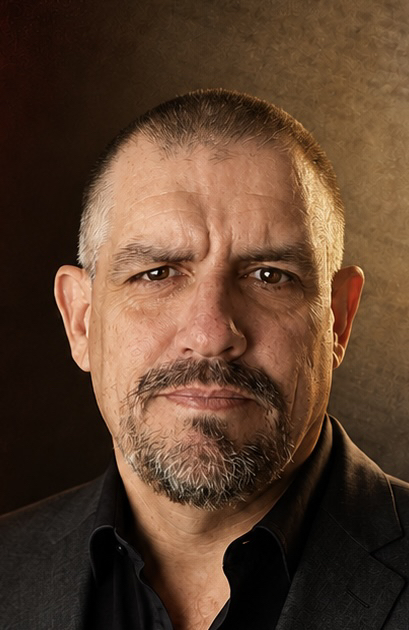
By Brian AJ Newman
Principal Employment & Human Rights Advocate | MYUNION
Case: Fair Work Ombudsman v GCH Vic Park Pty Ltd [2026] FedCFamC2G 1280
Court: Federal Circuit and Family Court of Australia, Division 2
Judge: Judge Johns
Penalty orders dated: 25 June 2026.

Unpaid wages do not disappear when an employer ignores a notice
A company’s failure to act on a Fair Work compliance notice resulted in $33,522 in civil penalties, including a personal penalty against its director. Those penalties were separate from the company’s obligations to rectify unpaid employee entitlements, pay interest and address applicable superannuation.
In Fair Work Ombudsman v GCH Vic Park Pty Ltd, the Court considered the consequences of failing to comply with a notice concerning 18 employees and $18,720.23 in outstanding entitlements. By the penalty hearing, the company had also failed to make the payments required by earlier court orders.
The decision illustrates an important distinction: repaying workers and being penalised for non-compliance are separate matters. An employer does not discharge its back-pay obligations by paying a penalty, and admitting a contravention does not remove the need to take corrective action.

What happened?
The respondents were GCH Vic Park Pty Ltd and its director, Jay Chunil Patel. In its subsequent public report on 14 July 2026, the Fair Work Ombudsman identified the company as the former operator of The Globe Pan and Grill in East Victoria Park, Perth, and described the affected workers as cooks and food and beverage attendants.
According to the judgment, a Fair Work Inspector’s investigation identified underpayments involving ordinary rates, weekend rates and accrued annual leave entitlements payable on termination. The investigation concerned entitlements under the Restaurant Industry Award 2020, with outstanding amounts accruing between 2 December 2021 and 31 July 2023.
A compliance notice issued on 31 July 2023 required the company to rectify the contraventions by making payments to the affected employees and providing evidence of compliance by 28 September 2023. The company did not comply within that period. The Fair Work Ombudsman subsequently commenced court proceedings.
Importantly, the judgment under review concerned the penalty stage. Liability was not being contested: the company had admitted its failure to comply, and the director had admitted his involvement in that failure. The Court’s task was to determine the appropriate penalties.
The earlier repayment orders had not been met
On 13 April 2026, the Court made declarations and orders by consent. It declared that the company had contravened section 716(5) of the Fair Work Act 2009 (Cth) by failing to comply with the notice. It also declared that Mr Patel was involved in that contravention within the meaning of section 550(2).
The company was ordered to pay the specified employee amounts to the Fair Work Ombudsman for distribution, calculate and pay any applicable superannuation under clause 22.2 of the award into the employees’ nominated funds, provide proof of those superannuation payments, and pay interest. The orders required action within 28 days.
However, at the penalty hearing, the Court recorded that no payments had been made to any of the employees. Judge Johns expressed grave concern that the company was now in breach of the Court’s orders and made clear that those obligations remained in place.
Mr Patel said the company had made efforts to pay and was trying its best. The difficulty was evidentiary: the respondents had filed no material supporting those assertions. The Court therefore had no evidence before it demonstrating efforts to make good the underpayments.
For MYUNION, this is a significant practical lesson: an assurance that something is being addressed is not the same as evidence that it has been addressed.
Why was the director personally penalised?
The director’s liability was not explained merely by his job title.
The Court recorded that Mr Patel was responsible for ensuring compliance, knew about the notice, knew compliance was required and intentionally participated in the failure to comply. That involvement gave rise to accessorial liability under section 550 of the Fair Work Act.
In this case, section 550 meant that a person knowingly involved in the company’s contravention was also treated as having contravened the relevant provision. The earlier consent declarations expressly recorded that consequence for Mr Patel.
The lesson is specific but important: the company structure did not prevent a personal penalty where the director’s knowledge and involvement were admitted. The judgment should not be read as making every director automatically liable for every workplace contravention.
Why admissions and cooperation were not enough
The Court recognised matters favourable to the respondents. These included their admissions, an apparent absence of prior contraventions and the fact that the case involved a single contravention.
Their admissions reduced the need for contested proceedings and justified a discount.
But those considerations had to be weighed against the continuing lack of corrective action.
The Fair Work Ombudsman had made significant efforts to assist the respondents, including offering to consider a payment plan, helping with the required calculations and undertaking estimated calculations.
Despite that assistance, compliance had not been achieved.
The Court also had no affidavit or other evidence supporting the company’s financial position. It therefore gave that issue no weight in determining the penalty. This was not a finding that financial circumstances could never matter; it was a finding that there was no supporting evidence in this proceeding.
Ultimately, the absence of evidence of corrective action diminished the discount otherwise available for the admissions. Acknowledging the problem helped, but it did not substitute for fixing it.
Why the Court treated the failure as serious
The Court emphasised deterrence: discouraging these respondents, and others, from future contraventions.
Drawing on the authorities discussed in the judgment, Judge Johns explained that a penalty should not be oppressive, but nor should it be so low that non-compliance becomes an acceptable cost of doing business.
A compliance notice is an enforcement mechanism designed to avoid litigation. The Court considered that failing to comply with such a mechanism attracted particular deterrent weight. It also found that the failure was serious notwithstanding the relatively modest amounts owed to some individual employees.
From an advocacy perspective, that reasoning matters. A worker should not dismiss an unpaid entitlement simply because the amount appears small. The amount of an individual shortfall and the seriousness of disregarding an enforcement obligation are different questions.
What did the Court order?
The Court imposed the following penalties, payable to the Commonwealth within 28 days:
GCH Vic Park Pty Ltd: $27,935.
Jay Chunil Patel: $5,587.
The combined penalties were $33,522.
These were additional to the earlier orders addressing $18,720.23 in unpaid entitlements, interest and applicable superannuation. Together, the penalties and identified unpaid entitlements amounted to $52,242.23, before interest and superannuation.
The $33,522 was not compensation awarded to the employees. The penalty orders directed payment to the Commonwealth. The workers’ entitlements were addressed through the separate repayment orders.
Nor does an order establish that payment has actually been received. The judgment recorded non-payment at the penalty hearing; it does not establish whether the respondents complied afterwards.
Practical lessons for workers
Keep the evidence organised. As an advocacy practice, MYUNION encourages workers raising pay concerns to retain payslips, rosters, timesheets, bank records, leave records and relevant correspondence. A clear schedule showing what was worked, what was paid and what appears to remain outstanding provides a useful starting point for assessing and presenting the issue.
Separate the different outcomes being sought. Back pay, superannuation, interest and civil penalties are not interchangeable. In this case, the Court used separate orders to address unpaid entitlements and penalise non-compliance.
Follow through after an admission or order. This decision demonstrates why a matter cannot necessarily be treated as resolved merely because liability is admitted or repayment is ordered. The Court’s concern was that the employees remained unpaid despite both.
These are practical advocacy lessons, not a suggestion that every underpayment matter follows the same process or produces the same outcome.
Practical lessons for employers and directors
The judgment provides a clear example of why responding to a compliance notice requires more than general assurances.
Here, assistance with calculations and the possibility of a payment plan had been offered. The respondents nevertheless failed to achieve compliance, and their assertions about repayment efforts were not supported by filed evidence.
MYUNION’s practical takeaway is to treat the required action, the deadline and the evidence of completion as distinct responsibilities. Where difficulties arise, they should be addressed promptly and supported by documents—not left unexplained until a penalty hearing.
For directors, this case also illustrates the potential personal consequences of knowingly participating in non-compliance. Mr Patel’s own involvement, rather than the company’s liability alone, was central to the penalty against him.
MYUNION’s perspective: compliance must produce a result for workers
This was a civil enforcement and penalty decision concerning a compliance notice. It was not a determination of an unfair dismissal, discrimination or workplace bullying complaint. Its central issues were admitted non-compliance, the director’s involvement and the appropriate financial penalties.
Its broader significance for employment advocacy is straightforward: recognising an entitlement is only part of achieving a practical outcome.
At MYUNION, our position is that workers’ concerns deserve careful examination, clear evidence and meaningful follow-through. An admission should lead to corrective action. An undertaking should be measured against what actually happens. A repayment order should be distinguished from money received.
Workers need more than an acknowledgement that something went wrong. They need the outstanding issue properly resolved.
Concerned about unpaid wages or employment entitlements?
MYUNION provides professional employment and human rights advocacy, including assistance with organising evidence, preparing workplace correspondence and negotiating practical outcomes.
Contact MYUNION: gethelp@myunion.au | 1300 MYUNION
JOIN MYUNION — BACK THE PEOPLE WHO BACK YOU.
Membership assistance is subject to the applicable plan, eligibility requirements and terms. Membership must be in place before the dispute arises; joining after an issue already exists does not make it eligible for membership-covered representation.
This article provides general information and advocacy commentary on the reported decision. It is not legal advice. MYUNION is not a law firm and does not provide legal advice or legal services. Where legal advice or court representation is required, assistance should be sought from a suitably qualified legal practitioner.