Bargain No More: Who really has the power to bargain?
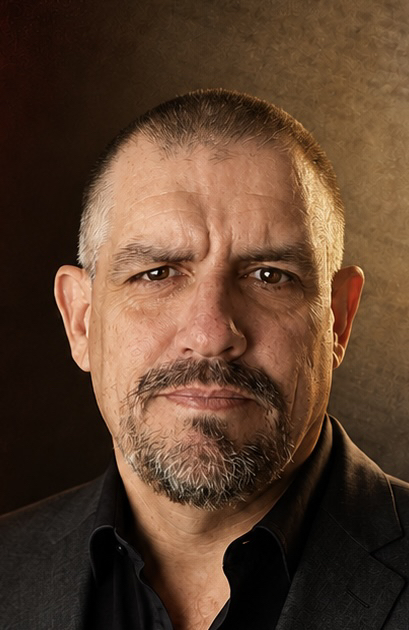
By Brian AJ Newman, LLB | Employment and Human Rights Advocate
A MYUNION and QPOA publication
The book follows the move towards enterprise bargaining through award restructuring, the Australian Industrial Relations Commission’s October 1991 bargaining principles and the Keating government’s 1993 reforms. It also examines Bob Hawke’s separate September 2002 Queensland public sector review, which includes a good faith bargaining protocol. The source reader links to the Queensland review and explains why it treats the reported circulation of a 1990s ACTU paper under the name “Hawke protocol” as an unresolved historical question.
Enterprise bargaining created a place for workers to negotiate conditions specific to their workplace. In a public service, however, the people negotiating those conditions may still work within centrally determined budgets, staffing limits and pay policies. That division of authority shapes what they can put on the table and what they can deliver afterwards.
Why prisons make the problem visible
Staffing decisions inside prisons have immediate consequences. The availability of a relief officer can determine whether someone takes a scheduled break or attends training. Staffing also affects whether an escort is available for a medical appointment, whether visits can proceed and whether people in custody can access programs.
In a publicly operated prison, a local manager may have responsibility for running the centre while a department or central agency controls the funded positions. In a privately operated prison, the company employs the officers and the state commissions the custodial service. An employment agreement may therefore sit alongside a government contract that sets expectations about how the prison will operate.
I examine both arrangements because the comparison needs to go beyond ownership. A return to public operation changes who runs a prison. Whether conditions improve depends on what happens to staffing, workload, training, supervision and the way officers can raise concerns. Likewise, a reported operating saving under private management tells us little about the conditions behind it without comparable evidence about what the service delivered.

Would prison officers be better off under the award?
One of the book’s most practical questions is what officers would gain or lose if the applicable award set their conditions in place of an enterprise agreement.
Take two officers with the same classification. One mainly works weekdays. The other regularly works nights, weekends and public holidays. A higher base rate paired with different penalties could affect them very differently. The comparison also needs to account for allowances, overtime, progression, leave, roster notice and the protections available when a dispute arises.
The book sets out state and territory comparisons, identifying the employers, industrial laws, commissions and instruments that govern the examples. It also examines cases that show why the comparison matters. In one Queensland prison dispute, applicable award wages overtook agreement wages for specified classifications. The officers obtained the higher rates under the legal arrangements that applied to that case while keeping their agreement conditions. In a separate retail case, actual rosters helped reveal losses that a higher base rate alone would have concealed.
For officers reading a proposed agreement, the starting point is the roster they actually work. Ask what it pays over a full cycle, what changes when they work a public holiday or cover a vacancy, and how they can enforce the protections on offer.
What would remain of union relevance without EBAs?
An enterprise agreement can secure valuable conditions. But imagine that agreement renewals disappeared tomorrow. An officer would still need help responding to a show cause letter, challenging an incorrect pay calculation, dealing with an unsafe deployment or raising a concern about discrimination. Officers would still need a collective voice when the same problem affected an entire shift or centre.
The book examines the traditional union movement’s shift in emphasis from servicing members towards organising workplaces. It also looks at ABS figures showing a long decline in union membership and differences across industries. Those figures tell us how membership has changed. Establishing why officers choose an independent association, or how bargaining power has changed in a particular prison, requires separate evidence.
I see individual service and collective organising as connected. If one officer receives a questionable payroll recovery notice, they need help checking their records and responding. If the same calculation affects dozens of officers, their representative should also be able to identify the pattern and take it to whoever can correct the underlying practice.
That is the test I put to any organisation that claims to speak for workers. What can a member count on between bargaining rounds?
Why we formed QPOA
I founded the Queensland Prison Officers Association in 2003 because officers needed an independent voice that understood custodial work. The book traces QPOA’s early advocacy through ABC interviews, parliamentary records and reporting on prison operations and staff concerns. Those records also show how contested it was for an occupational association to be heard alongside established representatives.
QPOA is now powered by MYUNION. As QPOA’s founder and MYUNION’s CEO, I have a direct stake in the argument for greater choice in representation. I also think workers should judge us by the standards we ask of others. Officers should be able to find out who will assist them, what the service covers, what it costs and which options are available in their jurisdiction.
An officer deciding who should stand beside them deserves clear answers to those questions before a workplace problem becomes urgent.
Read Bargain No More
The full 172-page thesis includes state and territory comparisons of prison pay and conditions, tables of legislation and industrial instruments, seven case reports, a bibliography and a subject index. The final chapters examine representation beyond EBAs and propose ways to give workers a greater say in funded staffing, workplace change and dispute resolution.
If you work in corrections, read the comparison for your jurisdiction alongside your roster and agreement.
Think of one issue you have raised at work. Who had authority to resolve it, and could your representative reach them?
Explore QPOA, powered by MYUNION, and learn about the employment and human rights advocacy available to officers and other workers.
READ ENTIRE THESIS